|
Autostereoscopic glasses-free displays are now widespread for showing 3D video. A number of organizations have developed a wide spectrum of autostereoscopic 3D displays, ranging from expensive and experimental units to more practical units for high-end consumer applications.
Autostereoscopic displays are increasingly popular for digital signage, electronic billboards, theme park attractions and applications in other areas.
The majority of existing autostereoscopic displays use multiview video as input. This input is displayed in such a way that different views of the same scene can be perceived with each eye; in addition, the views change when the viewer moves horizontally around the display. If these images correspond to the proper viewing angles, an illusion of depth appears; this illusion is usually maintained even in case of head movements.
The minimum number of views in current displays is five, and this minimum corresponds to low perceived video quality and unstable 3D effects. High-quality displays use at least nine views.
Typical autostereoscopic displays require multi-angle video and cannot work with stereo input, save in cases of built-in stereo-to-multiview converters.
Multiview video content is expensive and much less prevalent than stereo, thus stimulating high demand for stereo-to-multiview conversion.
Our technology uses complex temporal video analysis for automatic generation of intermediate views using a stereo pair. It also supports extrapolation, allowing synthesis of additional views for viewing locations beyond the borders of the original left and right stereo views, thus increasing parallax and improving visual 3D effects.
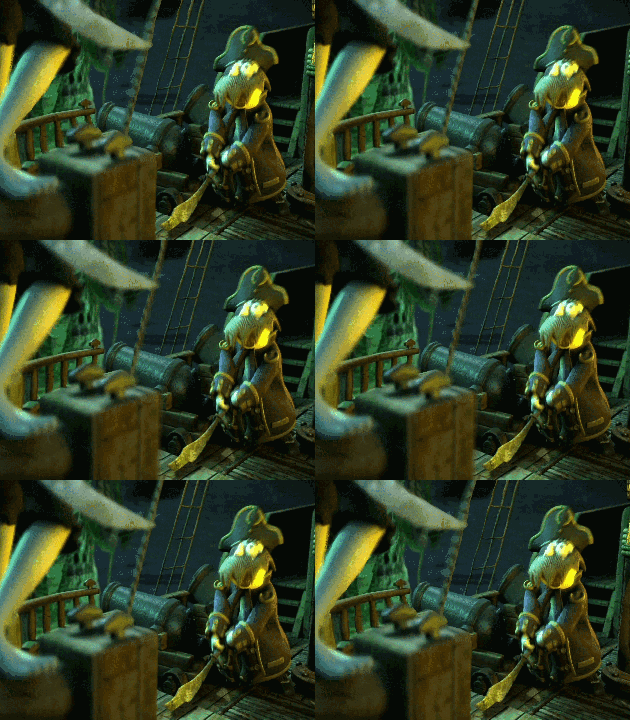
The animations at top of the page and below this text demonstrate creation of seven additional views for a given stereo pair.
|